
NEWS AND UPDATES
Aseana City: Beyond Geography
01 August 2025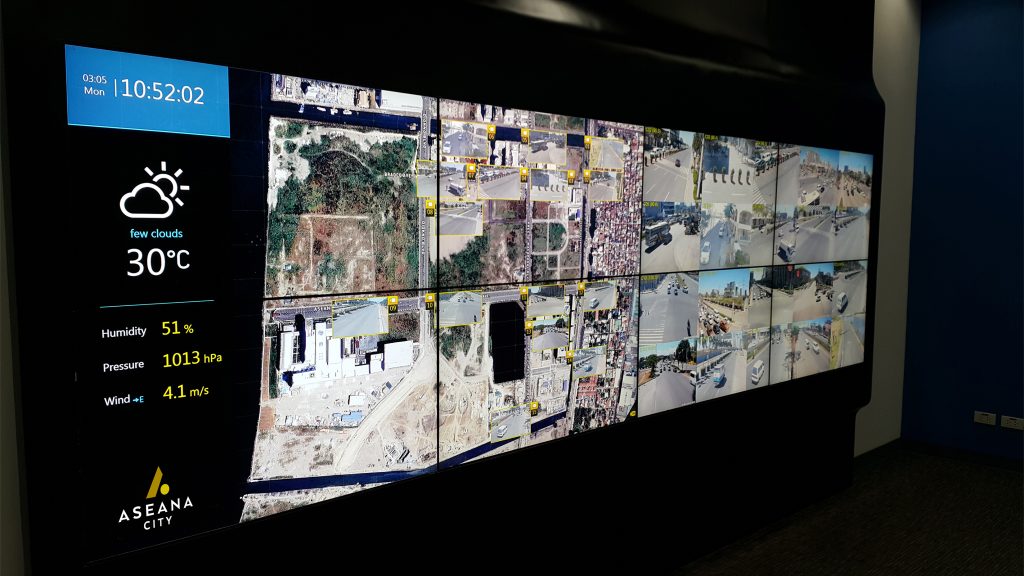
Parañaque City, Philippines — When Typhoon Ondoy struck in 2009, it inundated 80% of Metro Manila. The deluge affected millions, claimed hundreds of lives, and caused billions of pesos in economic losses.
Extreme weather events like Ondoy are no longer rare anomalies, they have grown in frequency and intensity in recent years. The Philippines sits in the Pacific typhoon belt, facing over 20 tropical cyclones a year. Just last month, four typhoons hit the country – Typhoons Bising, Crising, Dante, and Emong.
Climate scientists warn that such extreme weather events could grow more frequent as climate change accelerates. Recognizing this threat, many firms are now asking how much their operations are exposed to climate risks.
Location is More Than Geography
Location plays a defining role in a company’s risk exposure. Where facilities and offices are situated will determine whether a calamity means a brief disruption or a multi-million catastrophe.
Climate-resilient infrastructure creates long-term value by reducing downtime, protecting investments, and lowering operational costs. As architecture firm Gensler puts it, “resilient design is no longer a nice-to-have; it’s good business.”
Aseana City’s Climate Resilience
Aseana City is a prime example of climate resilience in action. The 107-hectare master-planned bayfront district was developed by D.M. Wenceslao & Associates, Inc. (DMW) with resilience at its core.
The estate remained flood-free in recent and past typhoons, including during Typhoon Ondoy’s onslaught, in stark contrast to most of Metro Manila. This did not happen by luck, but by design and proactive management.
Aseana City was built several meters above the older city grade and designed with disaster-resilient features including modern drainages, lift stations, and seawalls. The road and canal system are engineered to quickly channel stormwater out, keeping Aseana’s roads clear of deep flooding during adverse weather conditions. This ensures that offices and commercial establishments in the area always remain accessible.
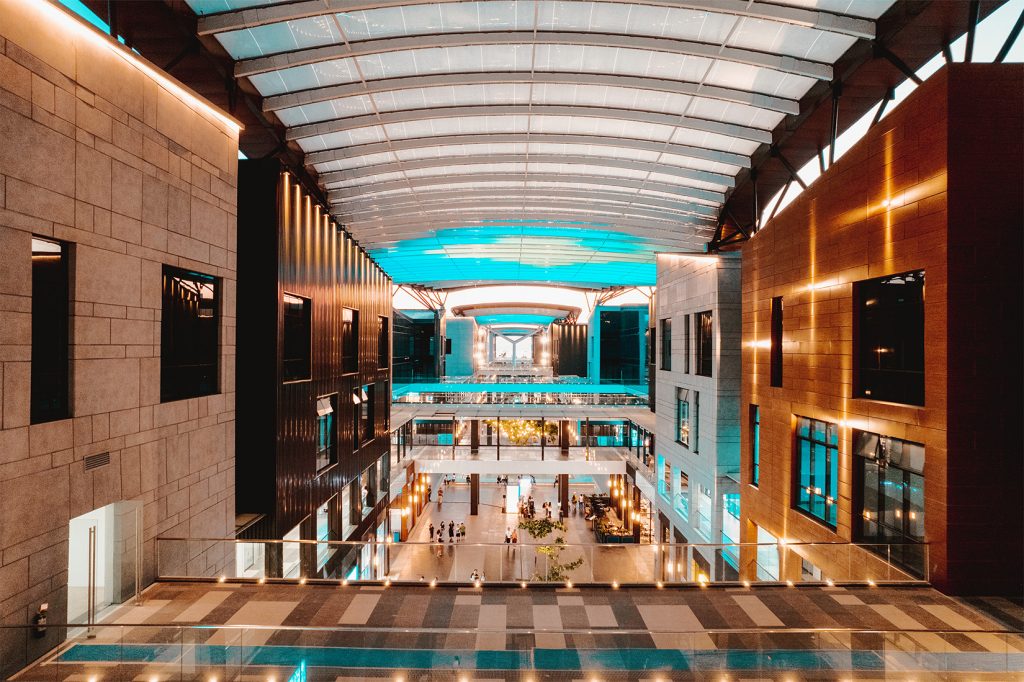
Parqal’s Canopy keeping Parq-goers protected from abrupt changes in weather
The district’s urban design further cushions it from climate impacts. Aseana features an imposing canopy in Parqal, arcaded sidewalks, and covered skywalks that allow people to move around safely during heavy rain. Utility infrastructure is underground, protecting power lines and telecom cables from strong winds.
Beyond physical infrastructure, Aseana City prioritizes active estate management as a critical layer of risk mitigation. Its estate team conducts year-round maintenance of drainage systems to prevent clogging and applies data-driven hazard mapping to flag vulnerabilities before they escalate. During typhoon season, additional field crews are mobilized, complemented by early warning protocols that support real-time coordination. A centralized emergency operations center oversees preparedness, with dedicated response teams trained to manage untoward incidents swiftly. Strengthening this commitment to public safety, Aseana City has also partnered with Lifeline 16-911, the Philippines’ leading private emergency service provider, to ensure round-the-clock emergency coverage within the estate. Through this initiative, residents, patrons, and businesses benefit from 24/7 quick response services at no cost — blending infrastructure resilience with human-centric safety nets.
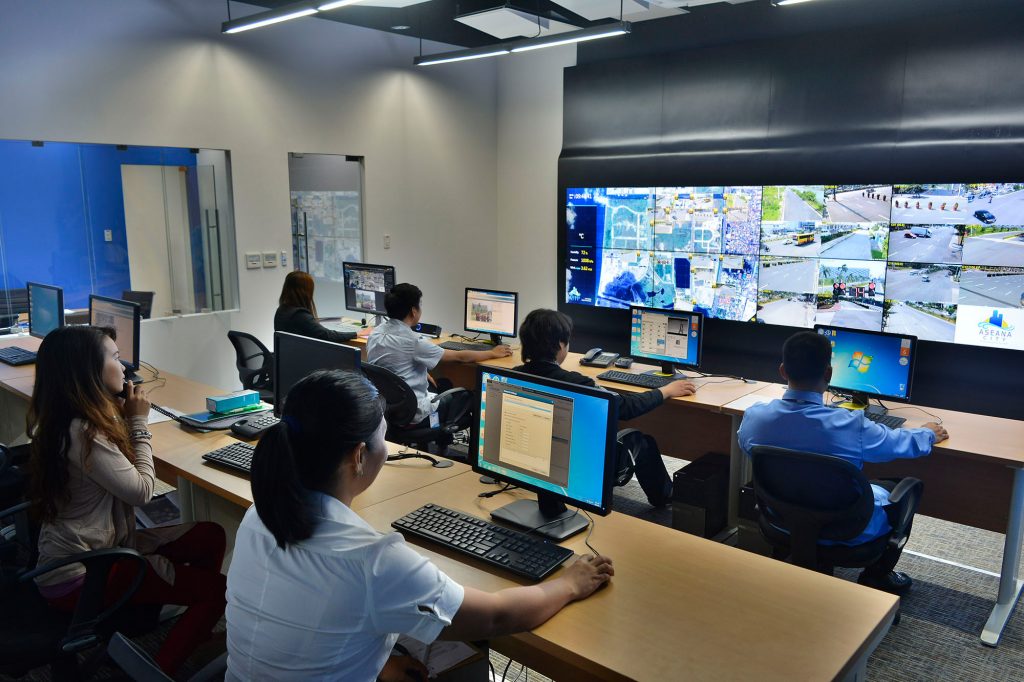
Aseana City’s Integrated Operations Center
The estate’s resilience arsenal also includes a Meralco smart substation that is designed for grid reliability and climate resilience. The 115 kV – 34.5 KV gas-insulated switchgear substation ensures stable electricity supply even during storms. It reduces the load on older stations and provides enhanced switching flexibility during contingencies. For businesses in Aseana, this translates to significantly lower risk of power fluctuations when typhoons strike, ensuring continuity. As Meralco noted, the Aseana substation is part of building a “smarter, more resilient, and future-ready grid.”
Situated by Manila Bay, Aseana City is mindful of storm surge and sea level rise risks. DMW has fortified the district’s coastline with an elevated seawall and land elevation measures that kept the estate well above the highest recorded storm surges. Aseana continuously upgrades its coastal defenses, raising embankments and improving drainages. These ongoing improvements are designed to keep the estate one step ahead of rising seas and stronger typhoon waves. This means that even when gale-force winds drive Manila Bay’s waters inland, critical assets in Aseana City are protected.
Resilience as a Competitive Advantage
Aseana City exemplifies how resilient location and design translate into real-world continuity. While older business districts in Metro Manila still grapple with chronic flooding and unplanned downtime, Aseana’s infrastructure and proactive estate management has enabled locators to keep doors open and lights on through the worst storms. Importantly, this is done with empathy and awareness that resilience is a shared responsibility — Aseana’s approach does not diminish the hardships of neighboring communities but rather hopes to model solutions that others can adopt, from better urban planning to rigorous maintenance and emergency preparedness.
“In an era of climate uncertainty, Location is not just a pin on the map, but a strategic choice that can make or break a company’s future. By investing in resilient infrastructure and smart urban design, Aseana City shows that it’s possible to thrive on a changing climate frontier,” said Delfin Angelo “Buds” Wenceslao, DMW Chief Executive Officer.
As the World Economic Forum puts it, “climate resilience isn’t a sunk cost; it’s an enabler of long-term value creation in an increasingly unpredictable world.” Companies that embed themselves in resilient locations are voting for a future where continuity is assured despite adversity. In the face of rising tides and storms, they are choosing the higher ground – both literally and strategically.
For Aseana office inquiries: leasing@aseanaholdingsinc.com
For Aseana residential inquiries: inquiries@midparktowers.com
References:
https://www.gensler.com/blog/how-to-design-for-resilience
https://hbr.org/2022/10/climate-risk-is-growing-is-your-company-prepared
https://hbr.org/2022/05/how-exposed-is-your-supply-chain-to-climate-risks
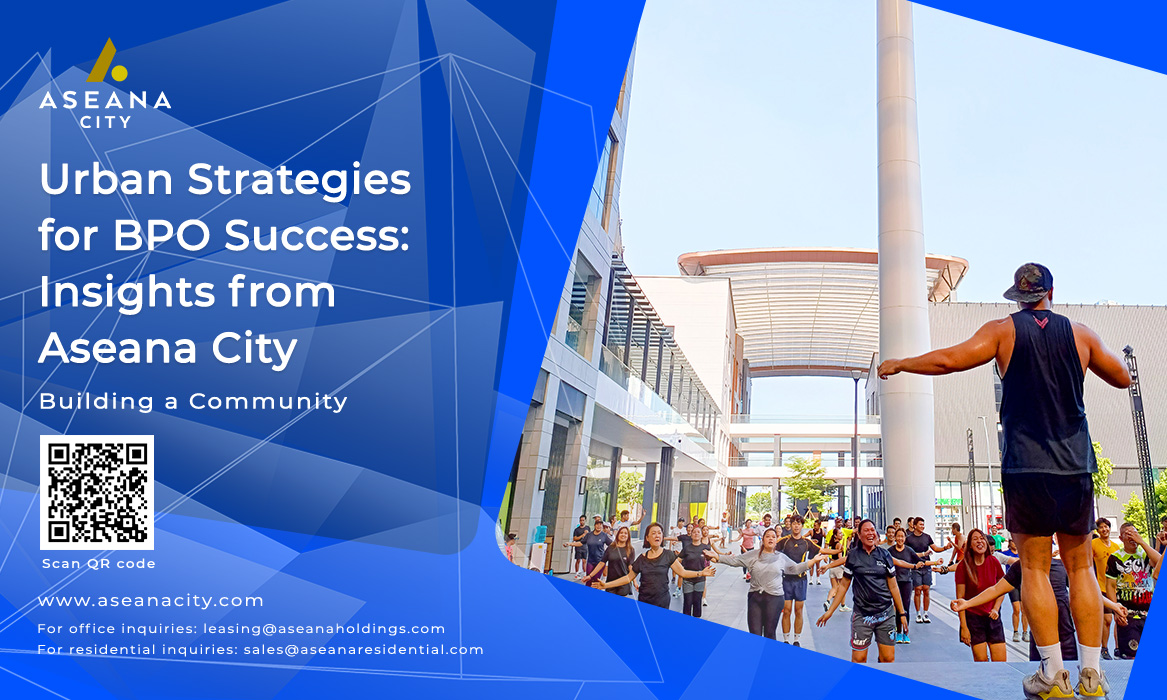
Urban Strategies for BPO Success: Insights from Aseana City
Building a Community
In today’s competitive outsourcing industry, a company’s success hinges on its people, and keeping employees engaged takes more than a desk and a paycheck, it requires fostering a genuine sense of belonging.
Research shows that highly engaged teams enjoy 41% lower absenteeism and employees who feel part of a community are 66% likelier to stay with the organization long-term.
Community-building is not just a feel-good HR initiative but smart economics driving higher productivity, lower turnover, and a healthier bottom-line.
Wellness Community in Aseana
At Aseana City, this community-centric approach is built into daily life. Instead of siloed cubicles, office spaces blend seamlessly with parks, trails, and fitness venues. Every week, Aseana City locators gather for group workouts in three different running clubs, cardio-dance classes, mat Pilates, and yoga sessions.
In practice, BPO employees wind down morning stress by jogging together or stretching in Parqal’s amphitheater, turning exercise into a social ritual. These gatherings build personal connections between coworkers and transform physical health routines into team-building experiences.
This design embodies the “third place” concept where communal environments beyond home or office offer a sense of belonging to a larger community. Parqal’s open plazas and shared events serve as that “third place”, fostering real connections. In our increasingly connected yet isolated world, third places have become invaluable; they are neutral spots where people can gather, form relationships, and feel part of something beyond work and home.
Aseana City has effectively built this antidote to workplace isolation right into its blueprint.
Building Bonds Through Sports and Recreation
Aseana City goes beyond fitness classes to create a sports culture. Bounce at Parqal, the estate’s outdoor sports complex, offers two multi-purpose courts (set up for basketball, volleyball, or even pickleball) and a football field, which hosts youth training for the Azkals Development Academy.
After office hours, these facilities spring to life. Aseana City organizes an inter-company basketball league at Bounce, drawing teams from different industries to compete in friendly after-work games. The basketball courts buzz with employees from various firms bonding over pickup games, while on weekends the football field invites pickup matches and family sports days.
Experts often note that social activities and friendly competition help form tighter-knit teams. Team sports can break down hierarchy and encourage camaraderie. The camaraderie developed on the field translates into a more cohesive work environment, fostering shared purpose back in the office.
Aseana City: Community by Design
By weaving community into the city itself, Aseana City has effectively pre-built the very employee networks that companies strive to create internally.
For BPO locators in Aseana City, “building a community” is not just a slogan, it is a tangible advantage. Being in Aseana means tapping into ready‑made engagement strategies (from group runs to sports leagues) without having to create them from scratch.
Aseana City is more than an office address; it is a thriving ecosystem where community, wellness, and business success converge.
Sources:
https://hbr.org/2022/08/rekindling-a-sense-of-community-at-work
https://www.gallup.com/workplace/236927/employee-engagement-drives-growth.aspx
https://www.gensler.com/blog/will-third-places-be-the-future-of-workplaces#en
For Aseana office inquiries: leasing@aseanaholdingsinc.com
For Aseana residential inquiries: inquiries@midparktowers.com
Run Aseana in Partnership with Zone2Sports
21 July 2025
🏃♂️ Ready to move? Join Run Aseana!
In partnership with Zone2Sports, enjoy FREE weekly training sessions designed for all fitness levels.
🗓️ Every Tuesday
🕒 7:00 – 9:00 PM
📍 Amphitheater, Parqal, Aseana City
✨ Be part of a growing wellness community in Aseana City. Together, let’s build a healthier and stronger Aseana community.
𝐏𝐫𝐞-𝐫𝐞𝐠𝐢𝐬𝐭𝐫𝐚𝐭𝐢𝐨𝐧𝐒𝐜𝐡𝐞𝐝𝐮𝐥𝐞
🗓️ Starts every Friday
🎟️ Limited to 100 slots per training session
For Aseana office inquiries: leasing@aseanaholdingsinc.com
For Aseana residential inquiries: inquiries@midparktowers.com

Urban Strategies for BPO Success: Insights from Aseana City
Seamless Connectivity and Mobility
The latest TomTom index pegs Manila’s congestion at 41% on average, with commuters wasting up to 4 days and 7 hours per year stuck in traffic.
For a BPO firm, this adds up to chronic lateness, fatigue, and productivity loss. Human-resource and operations leaders know all too well that every tardy BPO employee or empty desk means higher costs for overtime, shift swaps, or churn. In short, a city’s transport infrastructure problem is also a workforce problem.
Aseana City demonstrates a solution. Anchored by the new Redemptorist-Aseana LRT-1 station, commuters from over a dozen cities can now ride straight into Aseana’s offices without slogging through EDSA’s traffic jams. This rail connectivity effectively connected the estate to a Mega Manila’s rail network of over 19 million people.
Aseana’s streets reinforce this connectivity ethos, featuring wide pedestrian pathways, interconnected open spaces, and mixed-use zones designed to create a walkable and well-connected neighborhood. Located between major arteries (Diokno and Macapagal Boulevards), Aseana City is master planned to have over 20km of pedestrian lanes, 16km of bike paths, and over 4km of elevated walkways. To complement this, Aseana operates an Eco Jeep fleet that ferries workers between buildings and nearby transport hub Parañaque Integrated Terminal Exchange (PITx).
Connectivity-driven planning is not a generic buzzword, but rather a tested framework. Transit-Oriented Development (TOD) which integrate offices, residences, and amenities all within walking distance of public transit is credited worldwide with boosting urban performance. One OECD study estimates that coordinated land-use and transit projects could raise Manila’s reachable population by approximately 16%.
For companies, that translates to more on-time employees and fewer unplanned leaves. When infrastructure outpaces demand rather than limping behind it, staff are not forced to go through extremes just to clock in.
Ultimately, a city that flows, connects, and prioritizes its people produces happier, more reliable workers.
A clear lesson can be drawn from Aseana City: public mobility infrastructure is a strategic investment, not just an afterthought. Rail stations, bus terminals, and safe sidewalks are not just civic amenities, they are HR and operational tools that recover hours of lost productivity, reduce absenteeism, and lower the bottom-line costs of turnover.
In planning their next site, IT-BPM executives should remember that a well-linked location pays dividends in minutes saved, employees retained, and talent attracted.
Sources:
https://www.tomtom.com/traffic-index/philippines-country-traffic/
For office inquiries: leasing@aseanaholdingsinc.com
For residential inquiries: sales@aseanaresidential.com

About the photo: One of the major walkways in Aseana City is lined with well-lit bollards, creating a more welcoming atmosphere for evening strolls, outdoor workouts, and late-night commutes.
Well-lit streets make a world of difference. A vibrant city isn’t just about building stunning architecture and bustling streets but it’s about creating a space where people feel secure and free to enjoy everything it has to offer. With a series of smart infrastructure and security enhancements, Aseana City is making urban living more accessible, connected, and worry-free for residents, businesses, and visitors alike.
At the heart of these efforts is a commitment to safety. Aseana City has implemented various initiatives to enhance both security and accessibility within its community. To improve visibility and deter crime, the city has upgraded its street lighting along internal roads, open spaces, and common areas.
Brighter pathways don’t just enhance visibility, but they also create a more welcoming atmosphere for evening strolls, outdoor workouts, and late-night commutes. Pedestrian-friendly features have also been improved with refreshed crosswalks and better-marked pedestrian lanes. These upgrades ensure smoother movement for everyone, whether you’re walking, cycling, or driving, making the city’s roads safer and more efficient.
Taking safety to the next level, Aseana City has enhanced its CCTV surveillance system with advanced monitoring capabilities. This upgrade strengthens real-time security, protects properties, and allows for future innovations in urban safety. Complementing this digital approach is Aseana City’s on-the-ground security presence. The city’s 24/7 security operations and Integrated Operations Center (IOC) ensure a quick and coordinated response to any situation. A dedicated emergency hotline and rapid-response teams are in place, reinforcing the city’s commitment to a secure and well-protected environment. To further uphold safety and traffic discipline, Aseana City’s traffic enforcers have been deputized by the Traffic Parking and Management Office (TPMO) under the Metro Manila Development Authority (MMDA), ensuring order on the roads for both motorists and pedestrians. Emergency response is also getting a significant boost with Lifeline Ambulance, the Philippines’ fastest, largest, and most recognized private ambulance provider, having a future station in Aseana City. With a fully dedicated ambulance service, the city is equipped to handle emergency situations swiftly and efficiently.
These upgrades go beyond security. They shape a city where people can live, work, and explore with ease and confidence. By integrating smart safety measures with pedestrian-friendly infrastructure, Aseana City is redefining what it means to build a modern, thriving, and safe community.